
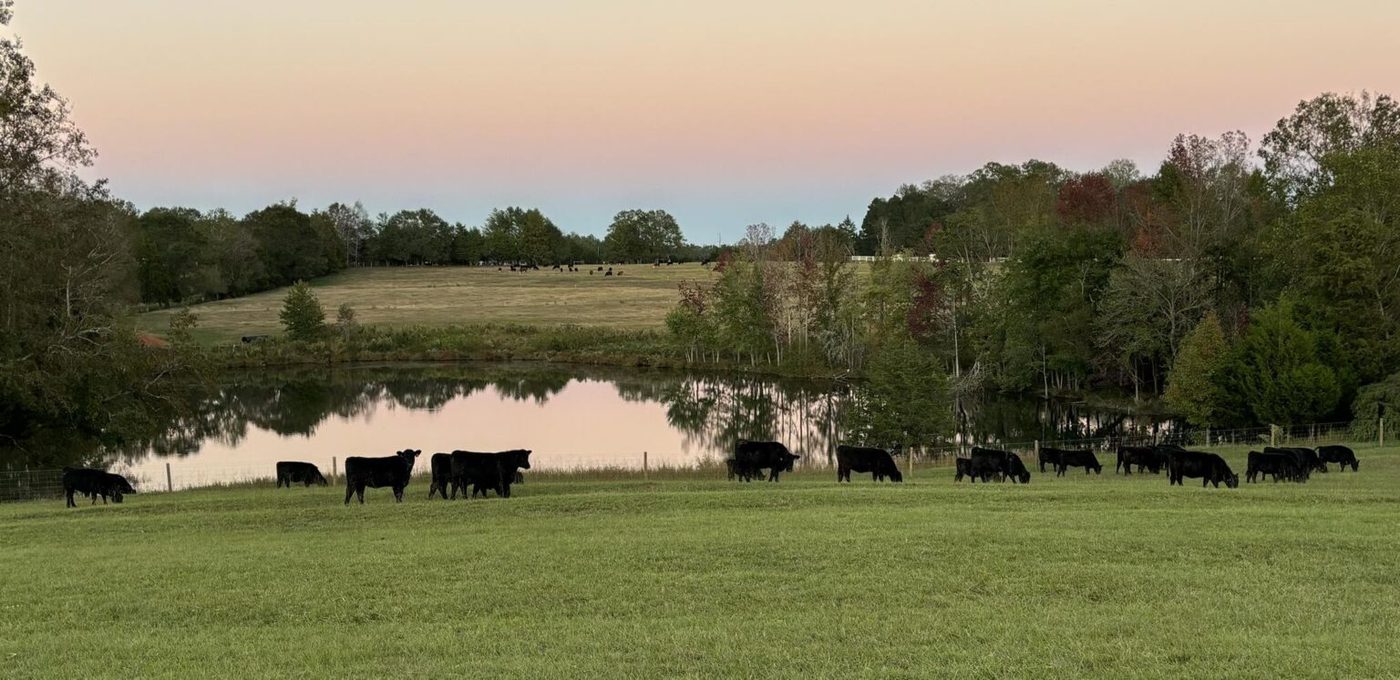
Anderson County is where the Upstate still has room. It's bigger and flatter than Greenville County, it has 56,000 acres of Lake Hartwell along its western edge, and until recently most of it was priced like farm country. That's changing from the north end down: Powdersville is now a Greenville suburb in everything but the tax bill, I-85 pulls growth south toward Anderson, and the county is racing to write rules for land that's had almost none. If you own acreage here, you own something that's being re-priced.
What the land is like here
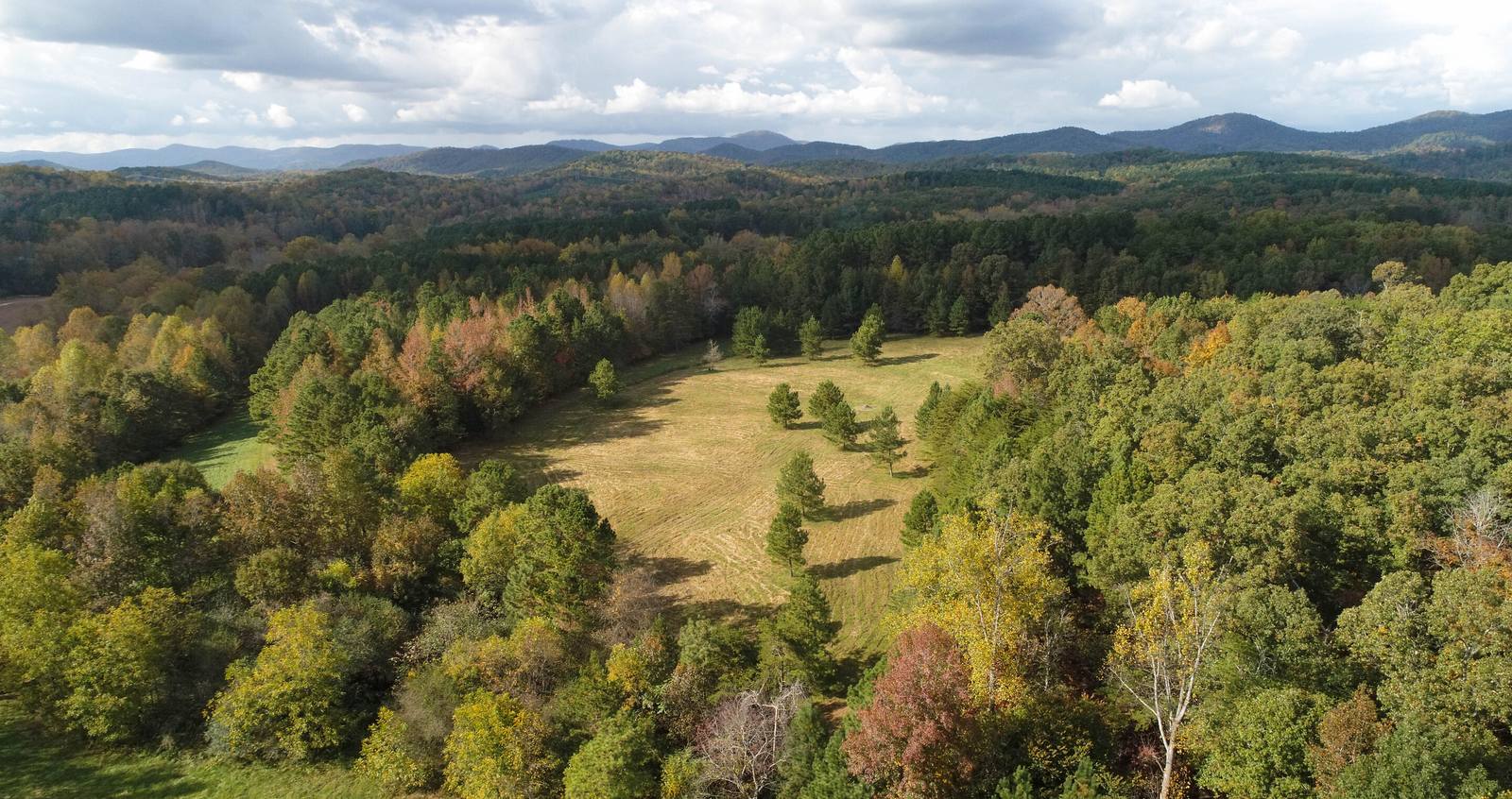
Most of the county is open, rolling Piedmont farmland: pasture, hay, planted pine and hardwood bottoms along the Saluda, the Rocky River and Three and Twenty Creek. It's gentler ground than the mountain counties to the north, and more of it is workable. Old dairy and cattle farms, some of them still running, make up the biggest tracts. Soils are the usual Upstate clay, better in the creek bottoms and river terraces, tighter on the ridges.
The western edge is Lake Hartwell, a Corps of Engineers reservoir shared with Georgia, with hundreds of miles of shoreline in Anderson County alone. Lake ground is its own market, priced on dock eligibility, water depth and cove-versus-main-lake rather than acreage. Inland, the Pendleton and Clemson corner leans toward the university, and the north end, Powdersville and Wren, has already been absorbed into the Greenville metro.
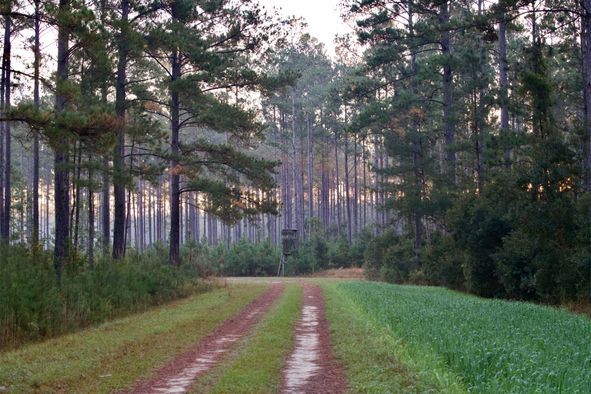
About three-quarters of unincorporated Anderson County is unzoned. Zoning is adopted precinct by precinct through referendums, and several precincts have voted on it in the last two years. Whether your parcel sits in a zoned precinct, an unzoned one, or one that's about to vote is the first thing we check, because it changes what the land can become and who will pay for it.
Unzoned, but not unregulated
Anderson County handles zoning differently from anywhere else in the Upstate. Rather than a county-wide map, zoning is adopted by voting precinct: residents petition, a referendum is held, and if it passes, that precinct gets districts. Cedar Grove was among the first to do it after 1999; Toney Creek, Rock Springs and Shirley Store voted in November 2025. As of 2026, roughly a quarter of the unincorporated county is zoned and three-quarters is not.
Unzoned doesn't mean anything goes. The county's Land Use chapter, subdivision regulations, a mass-grading ordinance and stormwater rules apply everywhere, and both the subdivision and mass-grading ordinances were tightened in 2025 after a temporary residential moratorium expired. In unzoned areas with sewer, the minimum lot was raised from 10,000 to 14,500 square feet. Inside the cities of Anderson, Belton, Williamston, Pendleton, Honea Path, Iva, Pelzer and West Pelzer, city zoning applies.
The LUDO is coming
The county is writing a Land Use and Development Ordinance to replace its separate Land Use and Zoning chapters with one code, eight chapters and a new official zoning map. It's being built on top of the 2026 Comprehensive Plan, whose first phase was slated for adoption in late 2025, with the ordinance to follow. For a landowner, that's the document that will eventually define rural density, open-space subdivisions and what "agricultural" means in a county that's never had to say. If you're holding land to sell in a few years, watch it.
Sewer, septic and the perc test
Water in Anderson County is unusually good: the Anderson Regional Joint Water System draws from Lake Hartwell and supplies most of the county through its member districts, so water lines reach farther into the countryside than sewer does. Sewer is the constraint. The city of Anderson, the county's own system and a handful of small municipal plants cover the corridors; beyond them, it's septic.
On septic ground the lot count is set by soil, not acreage, through the South Carolina Department of Environmental Services' site evaluation (the agency that took over from DHEC in 2024). Just over half an acre per lot is the practical floor, and tight clay pushes it up. On an old 100-acre farm, the perc results are the difference between an entitlement play and an estate-lot sale, and they're knowable before the sign goes up.
In Anderson County, check three things before you talk price: which precinct the parcel is in and whether it's zoned, how far to sewer, and whether it touches Hartwell. Any one of those can double the number or halve it.
Where the growth is heading
Anderson County's population was 220,000 at the 2020 Census and has been climbing since, driven by land that's cheaper than Greenville's and a commute that isn't much longer. The county's own planning staff talk about workforce demand that "keeps going up," and the planning commission approved four new subdivisions in the Powdersville and Anderson Ridge area in May 2026 over objections that the schools there were already at capacity. Here's how we read it:
- North: Powdersville, Wren and Highway 153. The hottest ground in the county. Anderson School District One, I-85 access and a Greenville address without Greenville prices. Sewered pasture with frontage here trades like Greenville County's southside.
- The I-85 spine: Highway 81, Highway 29 and the Anderson exits. Industrial and distribution demand along the interstate plus residential filling in behind it, from Piedmont down to the city of Anderson.
- West: Pendleton, Clemson's edge and the lake. University-adjacent demand and Hartwell shoreline. Two different buyers, both paying a premium.
- South: Belton, Honea Path, Iva, Starr. Still farm country, still priced like it, and the next stop once the north end fills. This is where patient landowners and patient buyers meet.
What acreage is actually worth here
A per-acre average for Anderson County puts a Hartwell lake lot and a Starr cattle farm in the same number and tells you nothing about either. What we can tell you is the shape of the market as we see it walking it in 2026:
Where your land falls between those depends on precinct and zoning status, sewer distance, perc, frontage, slope, floodplain, restrictions, timber and which buyer pool it truly belongs to. That's the underwriting we do before we list.
Selling land in Anderson County
Most land listings here get a per-acre comp, six phone photos and a sign at the road. Ours don't, because we do the buyer's homework first:
- We walk it. Fence lines, creek bottoms, old farm roads, the ridge where the clay changes. The things a desk agent never sees are where the value hides.
- We underwrite it. Precinct and zoning status, LUDO exposure, sewer distance, soils, floodplain, restrictions, and what a builder's lot yield would be. The same file the builder would build.
- We show it. Drone film, mapping and a story-first listing. A 100-acre farm deserves better than a windshield photo.
- We match it. Builders and investors we already talk to for the corridor ground; farmers, homesteaders, hunters and lake buyers for the land that should stay land.
Buying land in Anderson County
Before you close on acreage here, know: which precinct it's in and whether zoning is adopted or pending; how far the nearest sewer main is; what a soil evaluation says; whether the road frontage and the deeded access are the same thing; what's in the floodplain; what easements, covenants or timber deeds ride with the title; and, on Hartwell, exactly what the Corps of Engineers shoreline classification allows. We check all of it, including on off-market parcels we source for builders and investors.
Towns and communities we cover
Powdersville, Wren, Piedmont, Anderson, Pendleton, Williamston, Pelzer, West Pelzer, Belton, Honea Path, Iva, Starr, Townville, Fair Play, Sandy Springs and the rest of the county. Town-level notes are on the way; the chat button already knows all of them.