
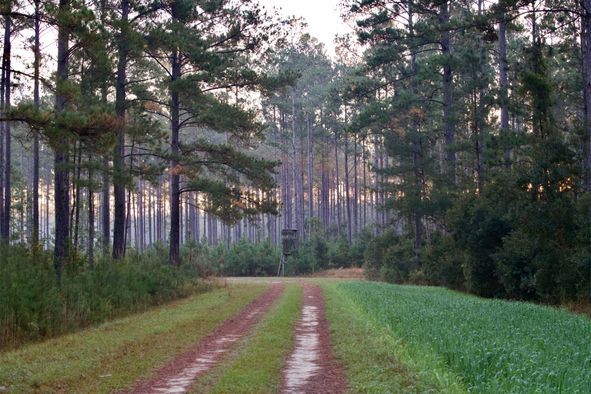
Cherokee County is the last stop before the state line. I-85 runs straight through it, Spartanburg is twenty minutes one way and Charlotte an hour the other, and for its entire history the county has managed land with no zoning at all. That's ending, at least along the interstate. If you own acreage here, you own something at the exact moment the rules are being written for it, and that's either a problem or an opportunity depending on where the parcel sits and whether you're paying attention.
What the land is like here
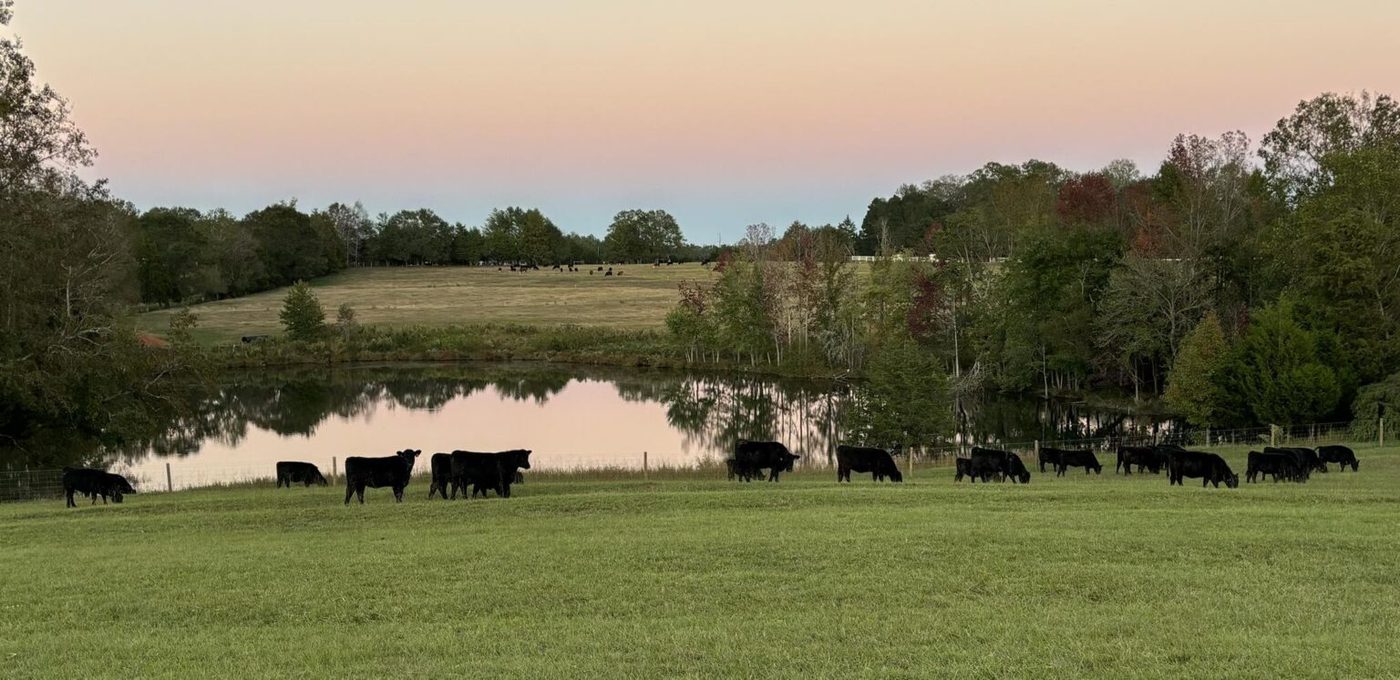
Cherokee County is the northern edge of the Piedmont, with the Blue Ridge foothills starting along Highway 11, which begins its run at Gaffney. The land is rolling farm and timber country: peach orchards that made Gaffney famous, cattle and hay ground, planted pine and hardwood, and the Broad River forming the eastern boundary with Union and York counties. Thicketty Creek, the Pacolet and the Broad drain it. Soils are Piedmont clay, better in the bottoms, tighter on the ridges, with some rockier ground toward the foothills and the Kings Mountain side.
The I-85 corridor cuts the county in half, and the land along it is different in kind: flatter, closer to utilities, and priced by what a distribution center or a subdivision would pay rather than by what it grows. The Cowpens battlefield sits on the western edge, Kings Mountain on the eastern, and both pull a history-and-quiet buyer who wants land near them.
Cherokee County has never had county zoning. In 2025 it had an ordinance drafted for the I-85 corridor only, with residential, rural, agricultural, commercial and industrial districts, and expected a council vote in early 2026. A parcel inside that corridor is about to get a district; a parcel outside it isn't, yet. Which side of the line you're on is the first thing we check.
No zoning, and the first ordinance
Outside Gaffney and Blacksburg, Cherokee County has run on general land development rules and nothing else. County Council adopted an updated comprehensive plan in July 2024 and said a zoning ordinance would follow. It did: Charlotte-based Benchmark Planning drafted an ordinance and a map covering the I-85 corridor, with districts for general residential, rural residential, agricultural, general commercial and general industrial uses. The county held public drop-in sessions in October 2025 and expected a council vote in early 2026, after three readings and a public hearing. The administrator's line was "we want growth but we want smart growth," and that other areas of the county would eventually be looked at too.
As of this writing, check the county's zoning page for whether the ordinance has passed and what the final map shows; the draft has been public since fall 2025. Inside the cities of Gaffney and Blacksburg, city zoning applies, and Blacksburg has been amending its own code to manage growth from the interstate.
What that means for a seller
- Corridor parcels get a label. An industrial or commercial district near an exit is worth more; a rural residential or agricultural district protects what's there and caps lot yield. Know which one you're getting.
- Outside the corridor, nothing changes yet. The county's general rules still apply and the buyer pool is still anyone with a use in mind.
- Timing matters. Land that's about to be zoned industrial trades differently before and after the vote. So does land about to be zoned agricultural.
Sewer, septic and the perc test
Sewer in Cherokee County means Gaffney. The Gaffney Board of Public Works serves the city and its corridors and is expanding: a $50 million grant is funding new capacity aimed at the I-85 growth, and BPW's "Project Gateway" is the infrastructure side of the county's smart-growth push. Blacksburg has its own smaller system. Where a gravity main is close, a parcel is priced on lot yield or on what an industrial user will pay. Where it isn't, the parcel is priced on perc.
Septic permits come from the South Carolina Department of Environmental Services, the agency that took over from DHEC in 2024, and their site evaluation sets the lot count regardless of what any future zoning allows. Just over half an acre per lot is the practical floor, and the county's tighter clay and rockier foothills ground push it up. A soil evaluation before you list or buy is the cheapest insurance in land.
In Cherokee County, three questions before price: inside or outside the I-85 zoning corridor, how far to a Gaffney BPW main, and what's the interstate exit distance. Answer those and you know which buyer the parcel belongs to. Everything else is refinement.
Where the growth is heading
Cherokee County is being squeezed from both ends: Spartanburg County's growth pushing east along I-85, and Charlotte's pushing west. Here's how we read it:
- The I-85 exits at Gaffney. The main event. Industrial, distribution and commercial users want big flat tracts with utilities at the interchanges, and BPW's sewer expansion is built for them. Residential fills in behind along the sewer lines.
- Blacksburg and the York County line. Closer to Charlotte than to Greenville. Interstate access, cheaper ground than anything in York County, and a town amending its zoning to keep up.
- Highway 29 and Highway 18 toward Spartanburg. The commuter belt, still affordable, and the next fill-in as the exits get expensive.
- Highway 11 and the Chesnee foothills. Lifestyle and farm demand. Views, orchards, cattle ground and the beginning of the Cherokee Foothills Scenic Highway. Not a subdivision market.
- The Broad River side. Timber, hunting and river frontage. Cheap, quiet, and priced for people who want it to stay that way.

What acreage is actually worth here
A per-acre average for Cherokee County puts a Broad River hunting tract and an I-85 exit parcel in the same number and tells you nothing about either. What we can tell you is the shape of the market as we see it walking it in 2026:
Where your land falls between those depends on corridor status, sewer distance, exit distance, perc, frontage, slope, floodplain, restrictions, timber and which buyer pool it truly belongs to. That's the underwriting we do before we list.
Selling land in Cherokee County
Most land listings here get a per-acre comp, six phone photos and a sign at the road. Ours don't, because we do the buyer's homework first:
- We walk it. Fence lines, creek bottoms, old orchard ground, the timber nobody cruised. The things a desk agent never sees are where the value hides.
- We underwrite it. Draft zoning district if it's in the corridor, BPW reach, soils, floodplain, restrictions, and what an industrial user or a builder would pay. The same file they'd build.
- We show it. Drone film, mapping and a story-first listing. An interstate tract needs a site plan; a foothills farm needs a sunrise. We do both.
- We match it. Industrial and builder buyers we already talk to for the corridor ground; farmers, homesteaders and hunters for the land that should stay land.
Buying land in Cherokee County
Before you close on acreage here, know: whether the parcel is inside the I-85 zoning corridor and what district the draft map gives it; how far the nearest BPW or Blacksburg sewer main is; what a soil evaluation says; whether the road frontage and the deeded access are the same thing; what's in the floodplain along the Broad, the Pacolet or Thicketty Creek; and what easements, covenants or timber deeds ride with the title. We check all of it, including on off-market parcels we source for builders, industrial users and investors.
Towns and communities we cover
Gaffney, Blacksburg, Chesnee (Cherokee side), Cowpens (Cherokee side), Kings Creek, Thicketty, Cherokee Falls, Draytonville, Macedonia and the rest of the county. Town-level notes are on the way; the chat button already knows all of them.