
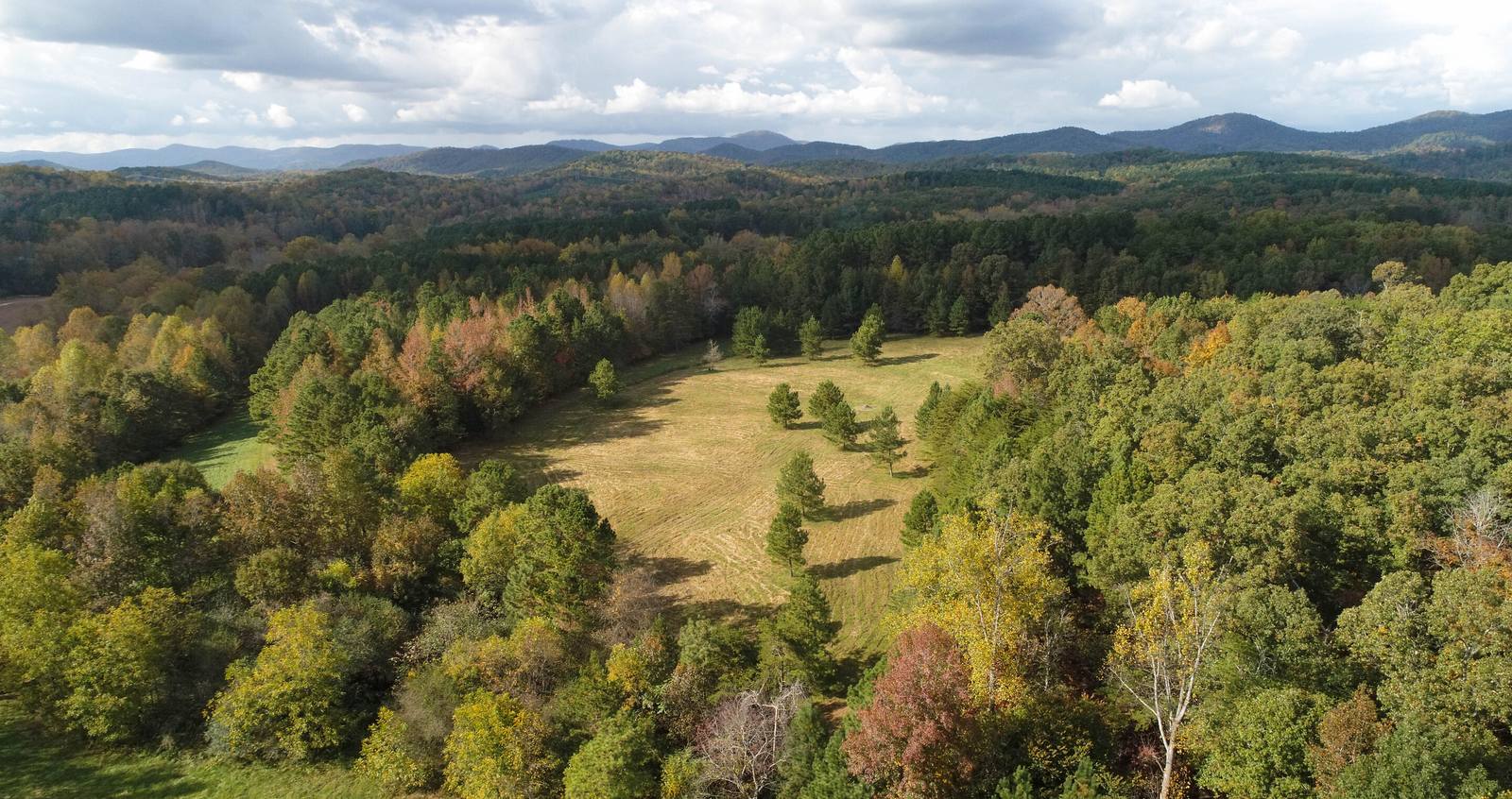
Greenville County is where the Blue Ridge runs out and the Piedmont starts, and it behaves like two different counties depending on which end of it you're standing on. Up north it's escarpment, cold creeks and hardwood coves. Down south it's rolling pasture, pine, and the sound of framing nailers. In the middle, the largest city in the Upstate is eating land in every direction. Selling or buying acreage here means knowing which of those three worlds your parcel actually lives in.
What the land is like here
The county runs about fifty miles top to bottom. The northern third climbs into the Blue Ridge Escarpment: Caesars Head, Jones Gap, the Mountain Bridge Wilderness, the old Dark Corner around Gowensville and Cleveland. Tracts up here are steep, wooded, spring-fed and hard to build on, which is exactly why people want them. Lakes Robinson and Cunningham sit at the foot of the mountains and pull the Travelers Rest and Tigerville market north with them.
The southern third, from Simpsonville and Fountain Inn down to Piedmont and the Laurens County line, is classic Piedmont farm country: red clay, open pasture, planted pine, creek bottoms along the Reedy, Saluda and Enoree. It's flatter, it percs better in most places, and it's within a half hour of Woodruff Road, so the builders have already found it.
Almost everything in between is either inside a city limit or close enough that the ground is priced like it is.
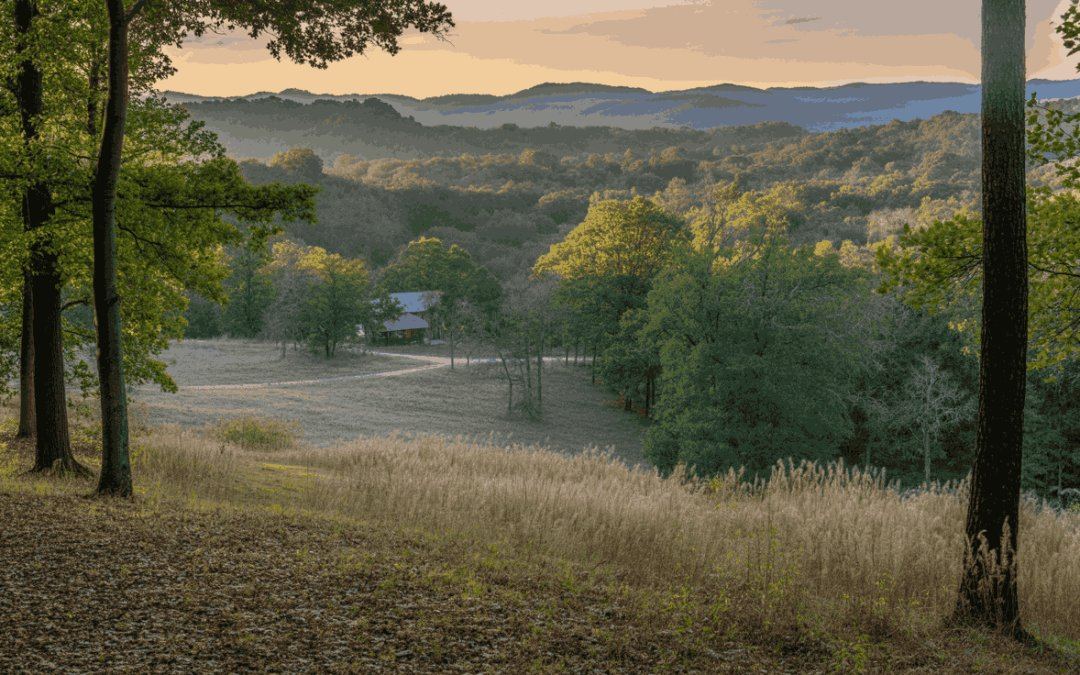
Around two-thirds of unincorporated Greenville County has no zoning district at all. Outside the cities and the zoned corridors, what you can do with a parcel comes down to the county's Land Development Regulations, the soil, and whether sewer is anywhere close. Two neighboring tracts can be worth wildly different money for reasons you can't see from the road.
Zoning, or the lack of it
Greenville County is unusual. By the county's own assessment, only about one-third of the unincorporated land is zoned; the rest is unzoned and expected to stay that way. In the unzoned areas the Zoning Ordinance doesn't apply. Subdivisions and land use are governed by the Land Development Regulations, which don't set a density but do require new subdivisions to be "compatible" with the surrounding area, a standard that gives the county real discretion (the much-discussed Section 3.1). Inside the cities of Greenville, Greer, Mauldin, Simpsonville, Fountain Inn and Travelers Rest, city zoning takes over entirely.
Then there's the UDO. County Council adopted a 725-page Unified Development Ordinance on December 3, 2024 that would have folded zoning, subdivision, tree, floodplain and sign rules into one code and, among other things, opened the door to open-space subdivisions in rural areas. The new council rescinded it on January 14, 2025 and sent it back to committee. As of fall 2026, the old patchwork is the law. If you're holding land with an eye on selling in a few years, the fate of the UDO is worth watching, because it could change what your parcel is allowed to become.
What that means for a seller
- Unzoned doesn't mean unlimited. Compatibility review, road standards, stormwater and floodplain rules still apply, and the county has discretion.
- Zoned rural ground has a ceiling. A parcel in an R-S or similar district carries a minimum lot size that caps its lot yield and its value to a builder.
- Annexation changes the math. Land adjoining a city can sometimes be annexed and rezoned, which is the single biggest value swing in the county.
Septic, sewer and the perc test
This is where most land deals in Greenville County are won or lost. Sewer is treated by ReWa and collected by a patchwork of local subdistricts (Metro, Taylors, Berea, Parker, Gantt, Marietta and others), and where the gravity main stops, septic begins. Outside sewer, the number of lots a parcel can support is set by soil, not acreage. Septic permits come from the South Carolina Department of Environmental Services, the agency that took over from DHEC in 2024, and their site evaluation decides everything.
In practice the county treats half an acre as the floor for a septic lot, and heavy Piedmont clay routinely pushes that to one, two or more acres per system. A forty-acre tract that percs might carry thirty homesites; the same forty acres in tight clay might carry eight. That's a seven-figure difference in what a builder will pay, and it's knowable for a few thousand dollars before you ever put a sign in the ground.
If the parcel is more than a mile from a sewer main, assume septic, get a soil evaluation early, and price to the perc, not the acreage. Buyers who skip this step are the ones we hear from later.
Where the growth is heading
The Greenville metro passed a million residents in 2025, and the pressure shows up on the edges of the county first. The 2024–2025 Census estimates put Greer at 7.3% growth in a single year, Fountain Inn at 6.5% and Mauldin at 5.2%, all in the top ten statewide, and Woodruff, just over the Spartanburg line, at 16.8%. Here's how we read the corridors:
- South: I-385, Highway 418 and the Fountain Inn–Simpsonville belt. The most active builder market in the county. Sewered pasture with road frontage here is at the top of the price stack, and national builders are actively short on lots.
- East: Greer, Highway 14, Highway 101 and the BMW orbit. Industrial and residential growth feeding off the plant and the inland port, pushing toward Spartanburg County and Woodruff.
- North: Travelers Rest and Highways 25 and 276. Lifestyle demand rather than builder demand: people paying for views, creeks and privacy within twenty minutes of downtown. Smaller tracts, higher per-acre numbers, buyers who want the land to stay land.
- West: Piedmont, Highway 153 and the Powdersville line. The overflow valve as the southside gets expensive; still transitional, still has real farm ground.
What acreage is actually worth here
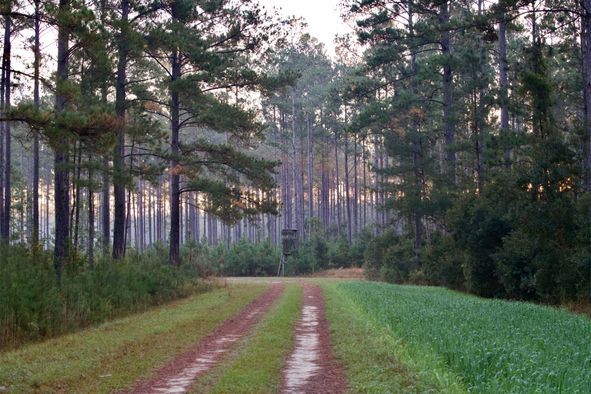
People ask for a per-acre number and we understand why, but a Greenville County average is a mountain tract and a Fountain Inn subdivision site divided by two. It tells you nothing about your parcel. What we can tell you is the shape of the market as we see it walking it in 2026:
Where your land falls between those isn't a guess. It's a function of frontage, access, sewer distance, perc, slope, floodplain, restrictions, timber value and which buyer pool the parcel really belongs to. That's the underwriting we do before we list, and it's why our sellers know their number before the first showing.
Selling land in Greenville County
Most land listings here get a per-acre comp, six phone photos and a sign at the road, and then sit. Ours don't, because we do the buyer's homework before the buyer shows up:
- We walk it. Fence lines, creek beds, old logging roads, the things a desk agent never sees are usually where the value hides.
- We underwrite it. Zoning or unzoned status, soils, access, utilities, flood zone, restrictions, growth context. The same file a builder would build.
- We show it. Drone film, mapping and a story-first listing, so the parcel is presented like it matters.
- We match it. Builders and investors we already talk to for the development ground; homesteaders, hunters and families for the land that should stay land.
Buying land in Greenville County
If you're on the buy side, the checklist is the same one we run for sellers, in reverse. Before you close on Greenville County acreage, know: whether it's zoned and what the district allows; whether a soil evaluation has been done and what it said; how far the nearest sewer main is; whether the road frontage and the deeded access are the same thing; what's in the floodplain; whether any easements, covenants or timber deeds ride with the title; and what the county's growth trajectory means for the ground five years out. We check all of it, including on off-market parcels we source for builders and investors.
Towns and communities we cover
Travelers Rest, Greer, Simpsonville, Fountain Inn, Mauldin, Piedmont, Taylors, Marietta, Cleveland, Tigerville, Gowensville, Slater, Pelzer, Fork Shoals and the rest of the county. Town-level notes are on the way; in the meantime, the chat button knows all of them.